

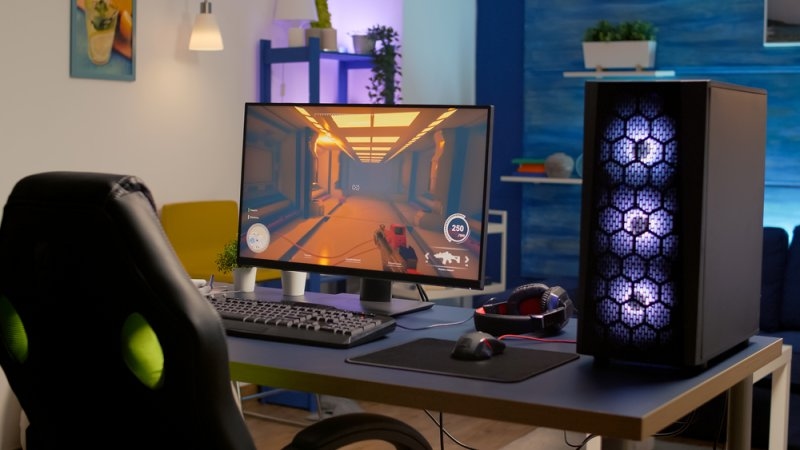
Picking between PC vs console sounds easy until you ask the internet. Suddenly everyone has a strong opinion, and half of them are shouting.
Here's the calmer truth. Both platforms have brilliant games. They just differ in price, power, convenience, and how much freedom you get after the purchase.
So let's walk through PC vs console gaming step by step, in plain language, and help you land on a choice you won't regret.
PC gaming means playing on a desktop or laptop, and you get to shape that computer around what you want. Pick the graphics card, the processor, the memory, and the storage. Every part follows your budget. The same machine also handles homework, video editing, streaming, and ordinary daily tasks, so it earns its desk space beyond games.
A console is a dedicated box built for one job: playing games. Think PlayStation, Xbox, or Nintendo Switch. Every console in a generation uses identical hardware, so developers tune each game for that one setup. You plug it into a TV and pick up a controller, and you're playing in minutes. No driver updates, no settings maze.
Before the details, here's a quick PC vs console comparison. The table below sums up the biggest differences in cost, power, upgrades, game access, and everyday ease. Keep it handy while you read, because each row changes how a normal week of gaming actually feels.
| Feature | PC Gaming | Console Gaming |
| Upfront cost | Higher, especially for strong parts | Lower, with one fixed price |
| Graphics and speed | Highest ceiling with upgrades | Steady and tuned for one setup |
| Upgrades | Swap individual parts anytime | Replace the whole console. |
| Game library | Huge, with mods and older titles | Curated, with strong exclusives |
| Ease of use | Needs some setup and tweaking | Plug in and play |
| Extra uses | Work, study, streaming, creating | Mostly gaming and media |
PC vs console cost is usually the first thing people ask about. The honest answer? It depends on what you expect. Consoles generally win on entry price, while a PC only matches that value if you choose parts carefully. Look at the full picture over several years, not just the price tag on day one.
A console arrives with a controller and a fixed price. Budgeting is easy, and surprises are rare. A gaming PC is different. Unless you already own a monitor, keyboard, and mouse, those add to the bill. Budget builds do exist, but they often skip the premium graphics that pulled you toward PC gaming in the first place.
PC games go on sale constantly, and a few big stores run deep discounts that stretch your money a long way. Consoles usually ask for a paid subscription to play online, which adds a yearly cost people often forget. Then again, those subscriptions can include free monthly games, so the value depends on how much you play.
A fair PC vs console cost comparison looks at three to five years of ownership, not launch week. PC owners can upgrade one part at a time. Console owners pay again when a new generation lands. Stretch it out far enough, and both paths can end up at similar totals, depending on your habits.
PC vs console performance depends on the hardware inside, the screen you play on, and the games you actually run. Modern consoles look sharp and play smoothly. Still, a high-end PC sets the ceiling for pure speed. Your display matters just as much as the machine, so check refresh rate and resolution before you buy.
A strong gaming PC can push higher resolutions and frame rates, which helps a lot in fast competitive shooters. Consoles aim for steady frame rates on fixed settings, so you rarely touch a menu. On either platform, a few tweaks go a long way. Try these best monitor settings for gaming from our detailed guide.
PC parts can be swapped as games get hungrier, so an older machine stays useful for years. Console hardware stays frozen for a generation, which pushes developers to squeeze more out of the same box. Input lag matters too, especially online. These steps to reduce input lag in online games can make a real difference.
A fair PC vs console performance comparison checks stability, speed, and visual quality in the same game. Console results stay consistent because everyone runs identical hardware. PC results shift with your parts and settings. That trade-off matters most if you'd rather have predictable play than the highest numbers on screen.
Every platform has strengths and weaknesses, so here's an honest look at PC vs console pros and cons. Read both tables slowly. One gamer's drawback is another gamer's favourite feature. Weigh each point against your budget, your room, and your favourite games before you buy anything.
PC gaming is a great fit if you enjoy being in control and don't mind a little patience. If you'd rather press one button and start playing, it can wear on you.
| PC Gaming Pros | PC Gaming Cons |
| Sharper graphics and smoother frame rates, plus you can swap out one part at a time instead of buying everything again. | The upfront price is steeper, and a stubborn driver or compatibility glitch can eat an entire evening. |
| Mods, free-to-play games, and constant sales fill your library for surprisingly little money. | So many settings and part choices can feel like a lot at first, and it takes a while before everything runs smoothly. |
Console gaming is built for people who just want to play. You give up some customization and long-term flexibility, which can feel limiting if you like tinkering with your setup.
| Console Gaming Pros | Console Gaming Cons |
| You can be playing within minutes, performance stays steady, and a couch full of friends or family makes local multiplayer easy. | The hardware can't be upgraded, and subscriptions plus higher game prices slowly add up over the years. |
| Big exclusives and a lower starting price make it an easy pick if you want fun without the fuss. | Mods are mostly off the table, and your library is tied to one brand, so switching later means starting over. |
PC vs console gaming looks very different once you compare libraries. PC has the widest catalogue: indie hits, older classics, and community mods that keep a game alive for years. Consoles guard their strongest exclusives, so some of the biggest story adventures stay tied to specific hardware, at least for a while.
The answer shifts with your habits, so think about how you actually play in a normal week.
So when people ask PC vs console which is better, the honest answer is whichever fits your life.
PC vs console for gaming really comes down to budget, space, patience, and who you play with. Be honest about each one.
If you keep asking yourself, should I buy a gaming PC or console, start with your budget and your habits. A short checklist clears up most of the confusion and stops expensive impulse buys.
Still stuck? Start with the cheaper option. You can always upgrade your setup later.
Unsure about PC or console? This guide matches your top priority with the platform that fits it. Treat it as a shortcut, then go back and read the earlier sections to confirm the details.
| Your Top Priority | Better Pick |
| Lowest upfront cost | Console |
| Highest graphics and frame rates | PC |
| Simple, fast setup | Console |
| Mods and a huge library | PC |
| Work and gaming on one device | PC |
The PC vs console debate has no universal winner. The best platform depends on your budget and your habits. PC gaming gives you flexibility and raw power, while console gaming gives you simplicity, comfort, and steady pricing. Use the checklist above, trust your own priorities, and pick the setup that keeps you playing.
Console, usually. You plug it in, grab a controller, and play. A PC isn't hard to learn, but the early settings menus and driver updates can annoy new players for a few weeks.
Most of the time, yes. A capable PC needs several pricey parts plus a monitor and accessories. Consoles cost far less on day one, though subscriptions and pricier games can narrow that gap over time.
On paper, a high-end PC wins with higher frame rates and sharper resolution. In daily play, though, consoles run steadily on fixed hardware, and most players find that smooth enough for relaxed evenings at home.
Often, yes. Many big releases land on both, but some exclusives stay put for a while or forever. Check the game's platform list, cross-play support, and current price before you spend anything.
A console usually stays supported for a full generation, often six to eight years. A gaming PC can last just as long, especially with a new graphics card or more memory along the way.
This content was created by AI