

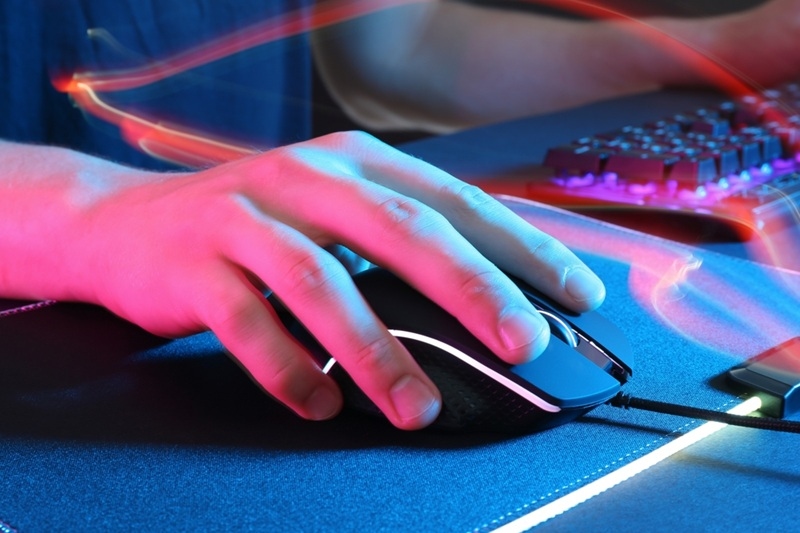
Look, gaming performance is not just about having the latest powerful PC or console out there. A lot of players end up fixating on little tech details, like mouse settings, thinking they can just flip a switch and boom! Instant gameplay improvement. One of the big mysteries in gaming is DPI, which stands for dots per inch. There are quite a few Mouse DPI Myths out there that mess with gamers’ heads, and sometimes, we have to admit, they can actually hurt performance rather than help it.
This guide is gonna lay out some common myths, clear up what really counts, and help you make better choices for gameplay.
There are several gaming mouse DPI myths that can influence your aim and control:
Gamers usually raise this question: Is higher DPI always better for a gaming mouse? The answer is- no.
You can increase the DPI to 'zoom' your cursor; however, that doesn't necessarily mean your accuracy will be improved as well. Actually, using very high DPI can cause disruption of your aim and can be quite challenging to control your movements, resulting in bad performance, especially in FPS games.
When you think about optimizing FPS gaming in 2026, precision really trumps speed. A lot of pro players go for moderate DPI settings; they find it gives them better control and consistency, which is key.
Another thing you hear a lot is that all pros are using crazy high DPI settings. This is a huge Mouse DPI Myth. The truth is, most of those pro folks stick to DPI settings between 400 and 1600. They bank more on muscle memory and consistent movements rather than super sensitive settings.
So, if your aim is to tweak FPS gaming for 2026, trying to mimic those high DPI settings could actually mess up your aim. Lower DPI is what allows smoother tracking and helps you aim better, totally essential when you are in the heat of competitive gaming.
DPI does not have anything to do with how your system processes graphics. FPS depends on your GPU and CPU as well as the settings you choose to use in the game, rather than on adjusting your mouse sensitivity. One of the biggest Mouse DPI misconceptions about FPS is that changing the sensitivity should be done instead of optimizing how well your computer is built to play the game.
When you decide to make improvements to your gaming performance in 2026, improving your hardware should take priority over playing with different settings.
DPI refers only to the sensitivity of the mouse cursor and does not affect system delay and/or input lag. So if you're having trouble with lag and want to reduce input lag, it's more about hardware availability, networking issues, or programs running in the background than about DPI settings.
You know how gaming mouse companies love to hype up those insane DPI numbers? It sort of gives the vibe that higher is always better. But honestly, using the max DPI is rarely helpful.
When you increase the DPI too much, your mouse pointer becomes so sensitive that it will be very difficult for you to aim and control it. So, it is one of those Mouse DPI Myths that mainly follow marketing claims rather than actual gameplay requirements.
Getting a reasonable setting that suits your style and your hand will always be a better way for you to get the best results than to look for the maximum DPI number.
Some folks think just changing DPI is the secret fix for their aiming issues. But nope… that is not how it works, unfortunately.
Your aim relies on so many things like practice, how you move your hand, mouse control, and even what your in-game sensitivity is. If you want to tweak FPS gaming in 2026, obsessing just over DPI is not gonna get you consistent results.
Improving your aim needs time and practice, not just a quick flick of a setting.
Learn More: The Evolution of 3D Graphics in Video Games and Art Styles.
Don't bother with those erroneous statements anymore; just do what's comfortable for you personally and how you prefer to play. A good base point is to use a mid-range DPI (like 800-1600), as this gives players speed while maintaining control. After you set that, you can tweak your in-game sensitivity a bit to get the movement just how you want it.
What really matters is consistency. If you keep switching your DPI settings around, you are just going to confuse your muscle memory. Pick a good setup and keep at it.
You know how Gaming Mouse DPI acts differently in various games? That stuff can really help you out in making smarter choices. For first-person shooters, being accurate is super important. Lower or mid-range DPI tends to be the best choice since it helps with precise aiming and tracking.
Now, if you are into games like MOBAs or those strategy ones, a bit higher DPI might be handy. You generally need to zip the cursor across the screen quickly. When it comes to casual gaming, DPI does not matter that much. It is more about comfort and how easy it is to use than being competitive.
If you want to really dial in your FPS gaming for 2026, you have to balance your DPI and the in-game sensitivity. DPI basically decides how fast your mouse moves, and then sensitivity figures out how that movement plays out in the game.
People often mess this up by cranking both up way too much, which can make your movements super fast and completely out of control. So, keeping one of them at a reasonable level and adjusting the other would be a better way to go.
Getting this balance is what sets apart the decent players from the really good ones. If you can grasp this, you can dodge those common Mouse DPI Myths and make your gameplay way better.
Check This Out:
Mouse settings are crucial in gaming, but many people just do not get it. Those Mouse DPI Myths can lead players down the wrong path, and it often hurts their game rather than helping.
Put in the hours, tweak your settings with care, and do not chase after numbers that sound good but are not realistic. At the end of the day, it is all about skill and consistency rather than just the DPI.
DPI changing may give you a totally different feeling of the mouse, but it is not going to boost your performance instantly. The real improvements come from practicing, being consistent, and having properly adjusted sensitivity rather than frequently changing DPI.
Newbies are recommended to go for a DPI of around 800 to 1600. This setting provides just the right combination of speed and control, allowing learners to get the hang of aiming and moving without giving up accuracy.
The answer is yes. In fact, setting your DPI way too high can cause your cursor to be hypersensitive, which will only result in loss of control and a lack of precision in your aiming. As a matter of fact, in FPS games where the need for precision is very high, it can even make it difficult to effectively track your enemies.
Adjusting DPI is alright, but it should only be a minimum change according to the nature of the game, since overall, it is advisable that you keep it unchanged. If you are the kind of person who changes DPI a lot, then you should be aware that it is much better to simply modify the in-game sensitivity for the different types of gameplay while maintaining control.
This content was created by AI